How To Write a Rock Solid Creative Brief [Examples + Template]



Contents
Do you know those campaigns that really connect with an audience—the ones that land perfectly and hit all the right notes? Campaigns of that caliber, the ones that showcase standout creativity, don’t usually come together overnight.
They’re always backed by a rock-solid creative brief.
Marketers in 2026 aren’t willing to settle for anything less than exceptional—and why should they? According to a recent survey by Business Wire, design and creativity climbed to become the top priority for 60% of marketers in the UK and US.
Need we say more? The stakes are high, and top-tier creativity is the expectation.
When only excellence will do, you need a strong game plan in place—a compelling creative brief.
In this quick guide, we’ll cover everything you need to know about creative briefs. We’ll also walk through how to write a strong brief, share a few classic examples, and provide a customizable creative brief template to help you get started.
First things first, what is a creative brief?
A creative brief is the cornerstone of a successful marketing campaign. It sculpts the campaign right from outlining the scope, setting the goals, and defining the audience to deciding the brand’s voice, messaging, deliverables, and deadlines.
Plus, the creative brief is a blueprint that clearly outlines a creative project’s mission, tackles the challenge, and lays out the path to achieve the goals.
Creative briefs, prepared by account managers (or in some cases project managers), are iterated till the work begins owing to evolving expectations and creative requirements. However, once the work for the campaign kicks off, this piece of the document serves as the guiding principle for all stakeholders involved in the creative process.
It’s all about the purpose… why do you need a creative brief?
Without a creative brief in place, your designers, copywriters, and overall marketing team or external creative agencies wouldn’t know the vision of the campaign, budgets would get blown out of proportion, and timelines would end up getting pushed.
The creative brief, being a standard practice in most organizations and agencies, guides your teams to do their most creative work from start to end.
Here are a few reasons why the creative brief “is the most sacred of all sacred ad documents,” as Will Burns rightly puts it.
The creative brief:
- Sets the campaign’s vision and purpose for your teams
- Brings everyone on board with a stable plan and ensures that they are on the same page
- Serves as an inspiration and the single point of reference, directing teams and third parties throughout the process
- Ensures that the creative strategy is in line with the budget and the expectations that are laid out
Know thy brief: What are the elements that make up a creative brief?
We have put together a bunch of essential elements that will remove all the back and forth and help you pin down exactly what you need to include in a creative brief. Besides, having a proper plan from the beginning will help you avoid unnecessary conflicts down the road.
Here’s a rundown of 10 key elements and the questions that they should address:
- Project background and business details: To begin with, you need to define the background of the project and your business – why is the project even happening in the first place and what led up to it?
- Product: It’s always about the product that you’re tasked with selling – what is the product, its features, benefits, price point?
- Objective: What are you looking to accomplish with this project?
- Target audience: What segments are you targeting?
- Competitors: Who are your top competitors and what is their current market share?
- Messaging and tone: What is the primary message of your campaign and what is the tone that you’d like to use?
- Budget: How much money are you going to shell out for this project?
- Stakeholders: Who will do what?
- Approvals and deliverables: What are the deliverables and who will be in charge of the approvals throughout the process?
- Timelines: What are the deadlines that you need to stick to?
The step-by-step process of writing a creative brief
Building a creative brief is no easy task — when you have so many important details to cover, how do you manage to pack everything into a single document?
Lucky for you, we’re letting you in on the process of writing a convincing and concise brief (not more than 2 pages).
Let’s just be clear on one thing, all creative briefs need not be the same — the point is to find what works for you. You can go ahead and include elements as per the needs of your campaign. Having said that, touching upon the below aspects can help you write a great brief.
1) Set the scene with the project background and brief overview
Give a short overview of the brand’s mission and what you plan to achieve with this campaign. You also need to outline the business profile and the details that set your brand apart.
2) Tackle the challenge and layout the objective:
Talk about the challenges and the problems that you are looking to solve and then move on to the goals and the objectives. Ensure that these goals are tied to the challenges you’ve mentioned above and set out KPIs by which you can track and measure them.
3) Define your audience
Carve out customer personas and analyze their demographics, interests, lifestyles, etc. Also mention what their current perception of your brand is and how you would like to change this.
4) Evaluate the competition
Talk about the competition, it’s important to know what their marketing strategy is and what channels they are using to reach out to the audience. Why? Knowing what they have done, will help you come up with better strategies (ideas that they have missed out on), giving you an edge in the market.
5) Describe the chief messaging concept, the tone, and set the budget
Mention the essence of the message and specify the tone that you would like to use. Establish brand guidelines that you need to follow and the mandatory elements that you need to include in the campaign.
The budget need not be set in stone. You could make a few additional spends, but it’s always best to stick to the initial budget.
6) Mention the stakeholders, the deliverables, and the timelines
It’s imperative to assign roles and set clear expectations with each team member that’s involved in the project.
A creative campaign involves multiple stages of approvals, specify who will be in charge of this. Clearly state what deliverables and assets you expect throughout the process.
Time management is key here. What are the deadlines for each of the processes involved? And what is the due date for the campaign to go live?
Examples of stellar creative briefs
We came across two great examples of creative briefs from marketing giants Nike and Netflix. These briefs are right on point, stressing upon all the core elements — they even have a great visual representation.
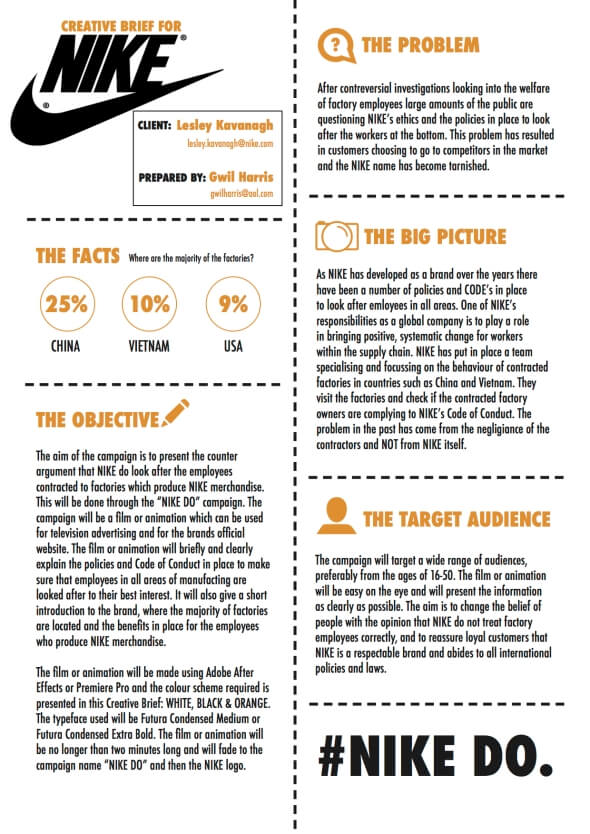
Source: Gwil Harris
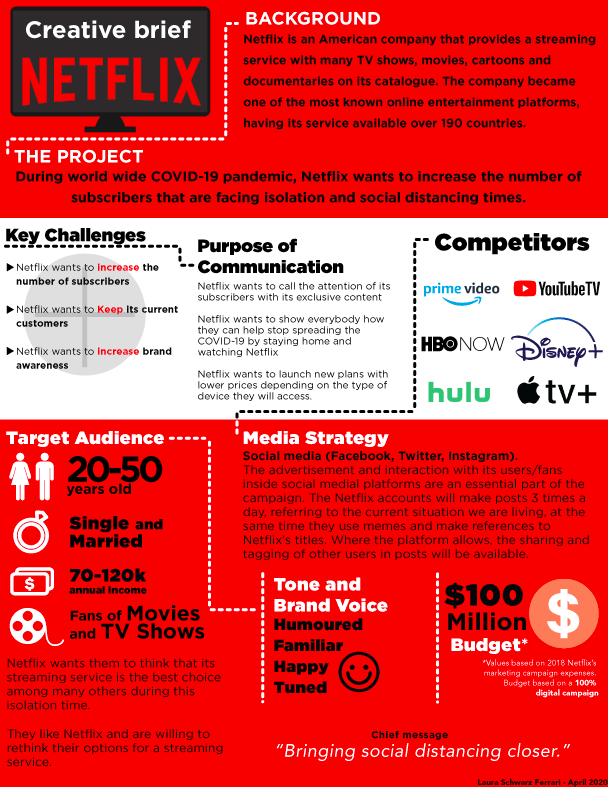
Source: Laura Ferrari
The ultimate creative brief template
We promised you a template right at the beginning and here it is. Download a customizable template that will set you on the right path and get you going in no time.
Bottom Line
Ready to roll out brilliant creative briefs? We bet you are! With the steps and template shared above, you now have everything you need to craft a compelling creative brief and set yourself up for success.
Once you’ve drafted the brief, you’ll want to share it with the other teams in your organization to align them on their responsibilities and the core goals of the campaign.


Continue reading





Social


