How not to use AI for lead generation


Contents
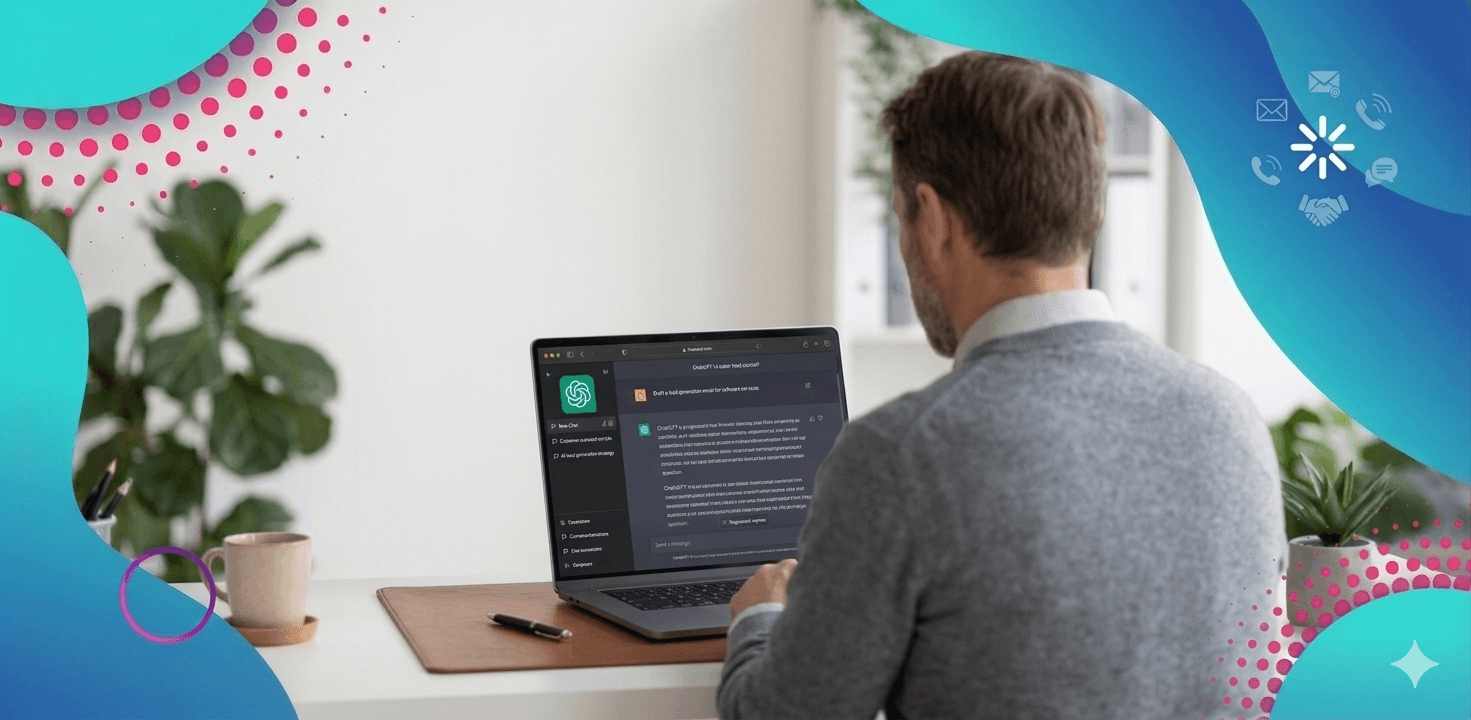
Most teams adopting AI for lead generation make the same mistake: they automate everything, personalize nothing, and wonder why reply rates tank. The tooling has never been more accessible, but accessibility doesn’t guarantee results. In fact, it often guarantees the opposite when strategy takes a backseat to speed.
By the end of this guide, you’ll know exactly which AI-powered lead gen mistakes are quietly killing your pipeline and what to do instead. Think of this as a pre-flight checklist before you scale outreach with any automation tool.
What AI Lead Generation Actually Does Well (and Where It Falls Apart)
AI lead generation uses machine learning and automation to identify prospects, score leads, personalize outreach, and trigger follow-ups without manual effort at every step. When it works, it compresses weeks of prospecting into hours. Reps spend more time in conversations and less time hunting for email addresses.
The problem isn’t the technology. The problem is that most teams treat AI like a magic button instead of an assistant that needs clear direction. Without good data, a defined ideal customer profile, and human review, AI amplifies bad habits at scale.
Automation Without Oversight Is Just Faster Failure
Here’s the honest trade-off: AI removes friction from prospecting, but friction sometimes protects you. A rep manually building a list will catch that a prospect left the company last month. An unchecked AI scraper won’t. Speed is only an advantage when your inputs are clean and your targeting is tight.
7 AI Lead Generation Mistakes That Hurt Your Pipeline
These aren’t hypothetical pitfalls. They’re patterns repeated across sales teams of every size, from two-person startups to enterprise outbound operations. If even two of these sound familiar, your pipeline is leaking revenue.
Mistake 1: Trusting Dirty Data as Your Foundation
AI is only as useful as the data feeding it. When teams skip list cleaning and rely on outdated contact databases, every downstream action suffers. Emails bounce. Lead scores become meaningless. Your sender reputation degrades, and deliverability craters.
Before you run a single AI-powered campaign, verify your data. Clean your lists, validate email addresses, and confirm that job titles and company associations are current. This isn’t glamorous work, but it’s the step that separates teams with strong reply rates from those flagged as spam.
Mistake 2: Letting AI Define Your ICP for You
Some teams feed a vague description into an AI prospecting tool and accept whatever list comes back. That’s backwards. You define the ideal customer profile first. AI then helps you find people who match it.
Without a sharp ICP, AI tools cast too wide a net. You’ll generate volume, sure, but most of those leads won’t convert. Worse, you’ll waste rep time on unqualified conversations that go nowhere.
Mistake 3: Treating “Hi {First_Name}” as Personalization
Automated follow-ups are powerful when used with restraint. The mistake is building eight-step sequences where every message is a variation of the same ask. Prospects notice, and they tune out by email three.
A better approach: automate the timing but vary the value in each touch. Share a relevant resource in one follow-up. Ask a genuine question in the next. Let the AI handle scheduling and triggers, but make sure a human has reviewed the sequence for tone and relevance before it goes live.
Mistake 4: Over-Automating Your Follow-Up Sequences
Automated follow-ups are powerful when used with restraint. The mistake is building eight-step sequences where every message is a variation of the same ask. Prospects notice, and they tune out by email three.
A better approach: automate the timing but vary the value in each touch. Share a relevant resource in one follow-up. Ask a genuine question in the next. Let the AI handle scheduling and triggers, but make sure a human has reviewed the sequence for tone and relevance before it goes live.
Mistake 5: Running AI Outbound Without Sales-Marketing Alignment
Marketing sets up AI-driven lead capture. Sales sets up AI-driven outbound. Neither team coordinates, and the same prospect gets hit with conflicting messages from both sides within the same week. This damages your brand faster than sending no emails at all.
Build a shared lead routing framework before scaling any AI outreach. Define who owns which prospects, when handoffs happen, and how lead status updates flow between your CRM and outreach tools.
Mistake 6: Removing Human Review Entirely
The whole point of AI is efficiency, so removing humans from the loop seems logical. It isn’t. AI-generated emails occasionally produce awkward phrasing, factual errors, or tone-deaf messaging. One bad email to a high-value prospect can burn a relationship permanently.
Keep a human checkpoint at the approval stage, especially for enterprise or high-ACV prospects. Let AI draft and suggest. Let a person approve and refine.
Mistake 7: Measuring Volume Instead of Pipeline Quality
“We sent 10,000 emails this month” is not a success metric. Neither is “we generated 500 leads.” Without tracking metrics that tie back to revenue, you’re optimizing for vanity.
Focus on positive reply rate, meeting-booked rate, MQL-to-SQL conversion, and pipeline created per campaign. These tell you whether your AI-driven lead generation is actually producing revenue or just producing noise. Tools like Mailshake’s Lead Drivers dashboard connect outreach activity directly to outcomes so you can see which sequences drive real meetings, not just opens.
AI Marketing Pitfalls to Address Before You Scale
Beyond individual campaign mistakes, some pitfalls are structural. They sit underneath your entire AI outreach strategy and quietly erode results over months.
Deliverability and Compliance Gaps
Scaling AI outreach without warming up domains, cleaning lists, and monitoring deliverability is like pouring water into a bucket with holes. You’ll increase send volume while your inbox placement rate drops. Warm up new sending domains gradually, use tools that monitor sender reputation, and stay compliant with CAN-SPAM and GDPR requirements.
Mailshake offers free email warm-up via SMTP specifically to protect sender reputation as you scale. Getting this right before you automate outreach prevents the kind of deliverability damage that takes months to repair.
When AI Outreach Does More Harm Than Good
Here’s a scenario worth considering: if your total addressable market is small (say, 200 target accounts), blasting AI-generated sequences to all of them simultaneously is a terrible idea. You burn through your entire prospect pool in weeks with no room to iterate or improve.
For narrow markets, use AI for research and enrichment, but keep outreach highly manual and personalized. Save AI-powered scale for broader segments where you can test, learn, and adjust without exhausting your pipeline.
Building an AI Prospecting Workflow That Actually Works
Avoiding mistakes is half the equation. The other half is building a workflow that keeps AI in its lane while maximizing its strengths.
- Define your ICP and build segment-specific lists. Start with firmographic and behavioral criteria. Use AI to find matching contacts, but validate the list manually or with a data quality tool.
- Enrich contact data before outreach. Append job titles, LinkedIn activity, and company signals so your messaging has context.
- Score and prioritize accounts. Let AI rank prospects by fit and intent signals. Focus rep time on the top tier.
- Draft personalized sequences with human review. AI writes the first draft. A human checks tone, accuracy, and relevance before launch.
- Automate follow-up timing, not follow-up content. Each touch should add new value. Vary the format between emails, social touches, and calls.
- Route qualified leads to sales with full context. When a prospect engages, the handoff to a rep should include every touchpoint and signal, not just a name and email.
Frequently Asked Questions
Q: How can I safely A/B test AI-generated outreach without risking my sender reputation?
Start with small, controlled test batches and keep the rest of your sends steady so you can isolate what changed. Test one variable at a time (subject line, opening line, CTA) and set clear stop rules if negative replies or spam complaints rise.
Q: What level of personalization is realistic to scale with AI for lead generation?
Aim for “segment-level personalization” at scale (industry, role, use case) and reserve deeper 1:1 personalization for top-tier accounts. AI can accelerate research and drafting, but you should set minimum standards for what must be true and relevant in every message.
Q: How do I create guardrails so AI content stays on-brand and legally safe?
Build a brand and compliance playbook that includes approved claims, tone guidelines, forbidden phrases, and required disclosures, then turn it into reusable prompts and templates. Add an approval workflow for high-risk messages, such as regulated industries or competitive comparisons.
Q: When should I use AI for inbound lead handling versus outbound prospecting?
Use AI for inbound triage when speed matters, for example routing, summarizing form responses, and recommending next steps. For outbound, AI is most helpful for list building, research, and first-draft messaging, while humans should own final targeting and relationship nuance.
Q: How can sales reps use AI without sounding robotic on calls or LinkedIn messages?
Have AI generate call prep, talk tracks, and short message options, then rewrite in your natural voice and keep it conversational. Use AI to summarize account context and propose questions, not to script the entire interaction word-for-word.
Q: What should I ask vendors before buying an AI lead generation tool?
Ask how the tool sources data, how often it refreshes it, and what controls exist for permissions, opt-outs, and audit logs. Also request transparency on deliverability features, integrations, and how performance is attributed across channels.
Q: How do I connect AI lead generation to revenue attribution in a multi-touch buyer journey?
Define a consistent attribution model (first-touch, last-touch, or multi-touch) and ensure every outreach touch is tracked with standardized fields and campaign IDs. Align CRM stages and definitions so pipeline and revenue can be traced back to specific sequences, segments, and messages.
Use AI as an Assistant, Not a Replacement
The teams getting the best results from AI for lead generation aren’t the ones automating the most. They’re the ones automating the right things while keeping humans in control of strategy, quality, and relationship-building. Better data, tighter targeting, and genuine personalization will always outperform volume-first automation.
Before you scale another campaign, audit your current workflow against the seven mistakes above. Fix the foundation first. Then let AI handle the heavy lifting on top of a system that’s already built for quality.
If you’re ready to build outreach sequences that prioritize deliverability and real pipeline over vanity metrics, explore Mailshake to see how purpose-built outreach tools keep AI working for you instead of against you.

Continue reading



Social


